Running a spa involves much more than delivering high-quality treatments. Every day, the team needs to manage bookings, organise schedules, welcome guests, coordinate staff, sell products, process payments, and make sure all these activities work together.
Many spas initially manage these tasks using a calendar, a spreadsheet, a booking system, and a separate sales tool. This approach may be sufficient when the number of visits is relatively small. Over time, however, the volume of information grows, and staff have to enter, check, and reconcile the same details in several places. Reception needs to know who is arriving, which service they have booked, and whether they intend to make an additional purchase. Meanwhile, the owner needs information about sales, occupancy, and the overall performance of the business.
A better approach is to view the spa as one connected sequence of activities. Booking, welcoming a guest, delivering a service, and completing payment should not operate as isolated tasks. The more effectively these activities are connected, the easier it becomes to maintain order, deliver a positive guest experience, and monitor business performance.
1. Start with the Entire Guest Visit, Not Individual Tools
Guests do not experience a spa as a collection of separate systems. They care about the entire journey: finding a suitable appointment, receiving a warm welcome, enjoying their treatment, and completing their visit.
The spa's internal organisation should reflect this perspective. Information collected during booking should be available to the people preparing for and handling the visit. Details about completed services and purchases should then support accurate checkout and reporting.
In practice, this means organising several connected areas:
- Bookings and scheduling - who is arriving, when, and for which service.
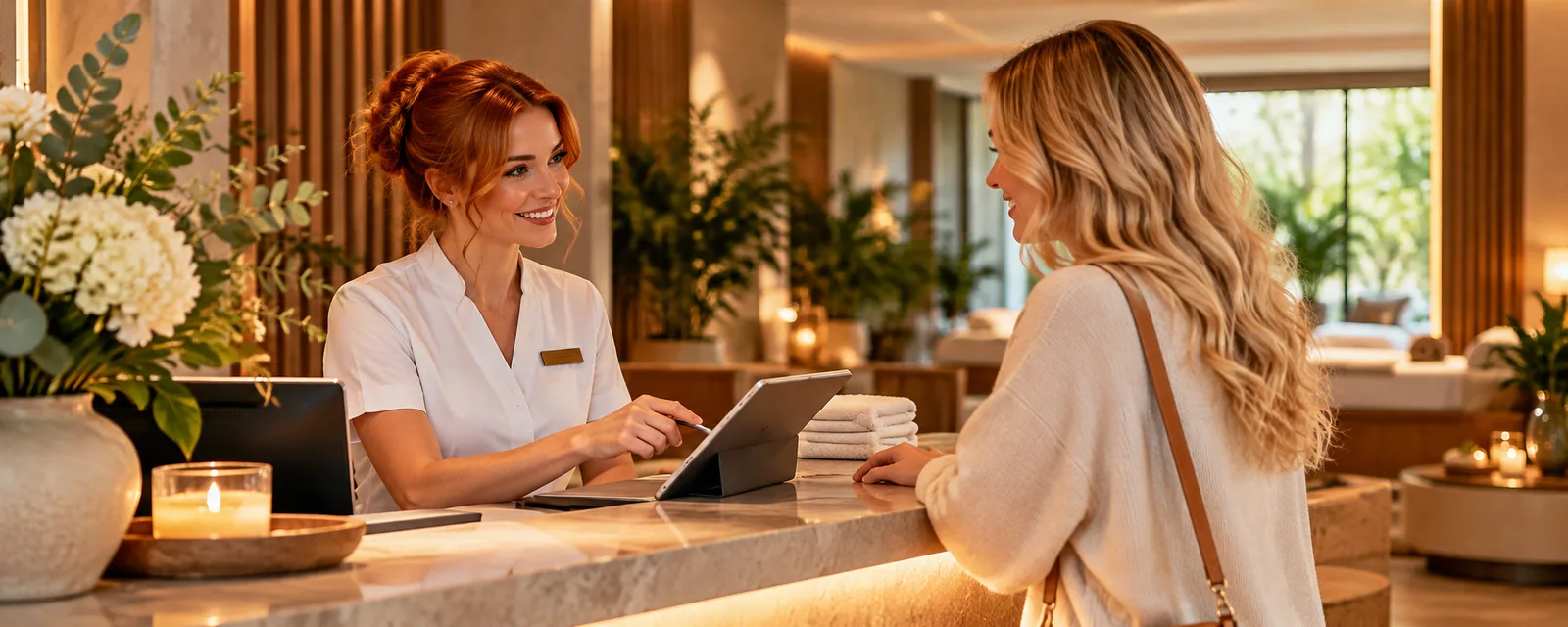
- Reception - how guests are welcomed, their appointments confirmed, and their arrival handled.
- Service delivery - which treatments or other services have been scheduled and completed.
- Sales - which products or additional services a guest purchases.
- Checkout - which items have been paid for and whether anything remains outstanding.
- Reporting - how many visits have been completed, how sales are performing, and where improvements may be possible.
Not every spa needs to implement sophisticated software immediately. However, it is important to identify which information is shared across different stages of a visit and where it should be maintained.
2. Connect Bookings with Daily Reception Work
A booking calendar alone is not enough if reception staff also have to maintain arrival lists, search through messages for details, and manually update information in other tools.
Before the day begins, staff should be able to review scheduled visits, appointment times, selected services, and any information relevant to daily operations. When a guest arrives, the team should be able to find the booking without searching through several different sources.
Connecting these activities helps reduce repetitive work. It also lowers the risk of mistakes, such as relying on an outdated appointment time or missing a change to a reservation.
A well-organised reception team should be able to answer a few basic questions quickly:
- Who is scheduled to arrive in the next few hours?
- Who has already arrived, and who is still expected?
- Which services are included in a particular booking?
- Is any additional preparation required?
- Have there been any changes to the schedule?
As the number of guests grows, having this information readily available becomes increasingly valuable. Reception no longer has to piece together the situation from separate lists. Instead, the team can work with shared, up-to-date information.
3. Organise the Visit from Arrival to Checkout
Welcoming a guest is an important moment, but it is only one stage of the visit. The full experience may also involve sharing information, coordinating treatments, arranging equipment rentals, and processing payment.
If each stage is handled differently, employees have to remember many details and pass information to one another verbally. When the spa gets busy, misunderstandings become more likely.
It is therefore worth establishing a consistent approach to guest visits. This should define what staff check on arrival, how they record relevant events, and how they complete the necessary tasks at the end of the visit.
For example, a receptionist may start by finding the booking, confirming the services included, and recording the start of the visit according to the spa's procedures. After the guest finishes, the receptionist should be able to review the items requiring payment and complete the relevant checkout steps.
The goal is not to create a rigid script for every conversation. It is to reduce situations in which important information exists only in one employee's memory or on a piece of paper left at the desk.
4. Make Sales Part of the Guest Experience
Selling products at a spa does not have to mean aggressively promoting additional purchases. Retail sales can be a natural part of the guest experience. A guest might buy a cosmetic product used during a treatment, choose something for their home skincare routine, or book an additional service offered by the spa.
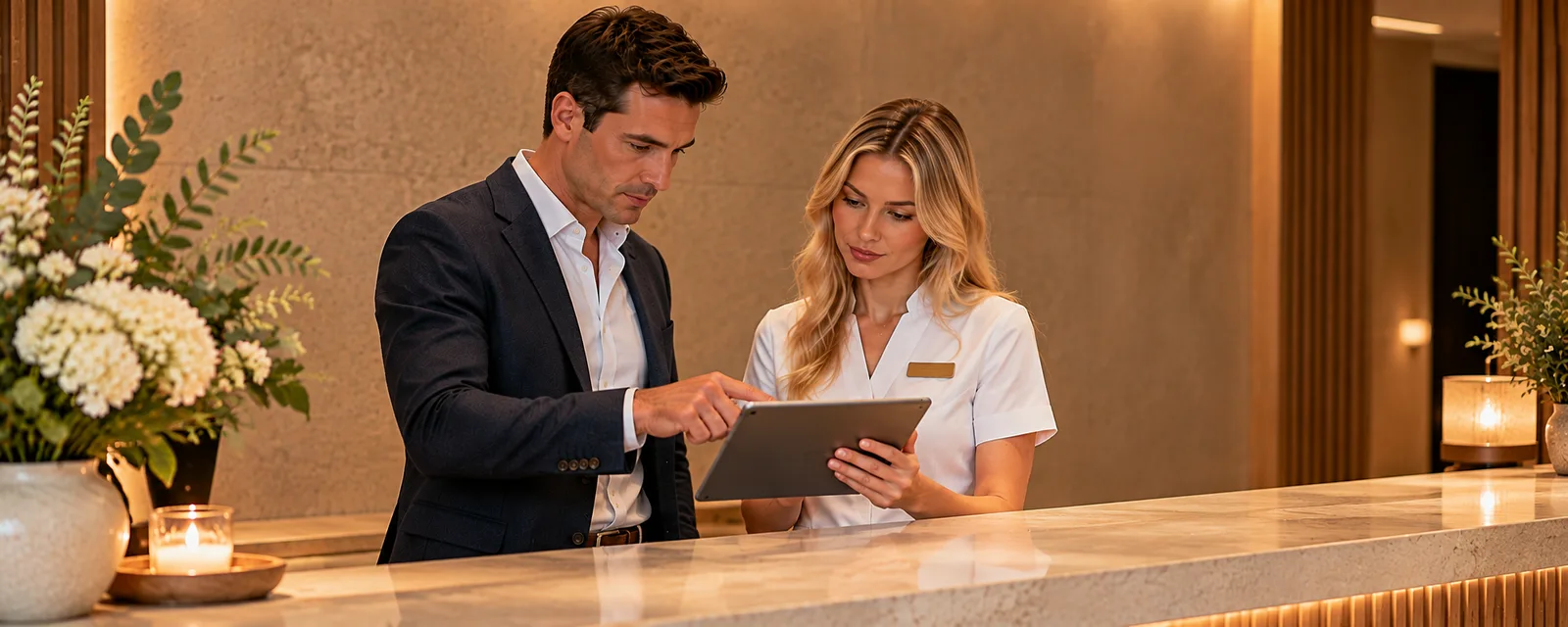
For this to work smoothly, staff should be able to handle a purchase without switching unnecessarily between tools or manually reconstructing the guest's information.
It is also important to distinguish product sales from treatment delivery. A treatment may be included in a booking, while a skincare product purchased at reception should be recorded as a separate sales item. This allows the spa to analyse service revenue and retail sales independently.
A few basic elements are worth putting in place:
- A clear list of products available for sale.
- Consistent product names and prices.
- A straightforward way to record purchases during guest service.
- Transparent checkout and payment records.
- Access to information that allows service revenue and product sales to be analysed separately.
This approach also makes it easier to assess whether additional sales are contributing to the business. Rather than relying on general impressions, the owner can identify popular products and determine what proportion of revenue comes from retail sales.
5. Keep Checkout and Payment Records Consistent
Checkout is one of the points where organisational problems become especially visible. A guest may receive a treatment, purchase a cosmetic product, or add another service. If information about these items is scattered across different tools, staff have to make sure that nothing has been overlooked.
It is therefore worth defining how the spa connects services, products, and payments during daily operations. This does not mean that every item must follow exactly the same recording procedure. Each item should, however, be clearly identified and accounted for according to the spa's established rules.
A consistent approach makes it easier to answer questions such as:
- Which services and products are included in the checkout?
- Have all items been recorded correctly?
- What amount has been collected from the guest?
- Has the checkout been completed?
- Do sales records match the payment records?
It is also important to distinguish operational information from accounting requirements. A system supporting daily operations may help record sales and payments, but it should not automatically be assumed to replace all required accounting or fiscal solutions. The scope of any integration should reflect the spa's actual needs and obligations.
6. Use Data to Make Better Decisions
Connecting bookings, reception, and sales creates the greatest value when the information collected helps the owner understand how the entire spa is performing.
The owner needs more than a total revenue figure at the end of the month. They need to understand what contributes to that result, how available appointment slots are being used, and which parts of the business may require attention.
Useful measures may include:
Number of completed visits. This helps assess actual guest activity and compare periods with different levels of demand.
Use of available appointment slots. This can reveal the busiest periods as well as times when capacity remains unused.
Revenue from services. This helps identify which treatments or services account for a significant share of sales.
Product sales. This shows which items attract the most interest and whether retail sales are an important part of the business.
Sales value per visit. This can help track changes in purchasing behaviour, provided the data is calculated consistently and compared in the right context.
Cancellations and no-shows. Reviewing these figures can help the spa understand how schedule changes affect the use of available appointments.
Numbers alone do not explain every cause. A decline in product sales may result from seasonality, changes to the product range, stock availability, or other factors. Data should therefore be considered alongside practical knowledge of daily operations rather than treated as an automatic explanation for every problem.
7. Choose Tools That Support Team Collaboration
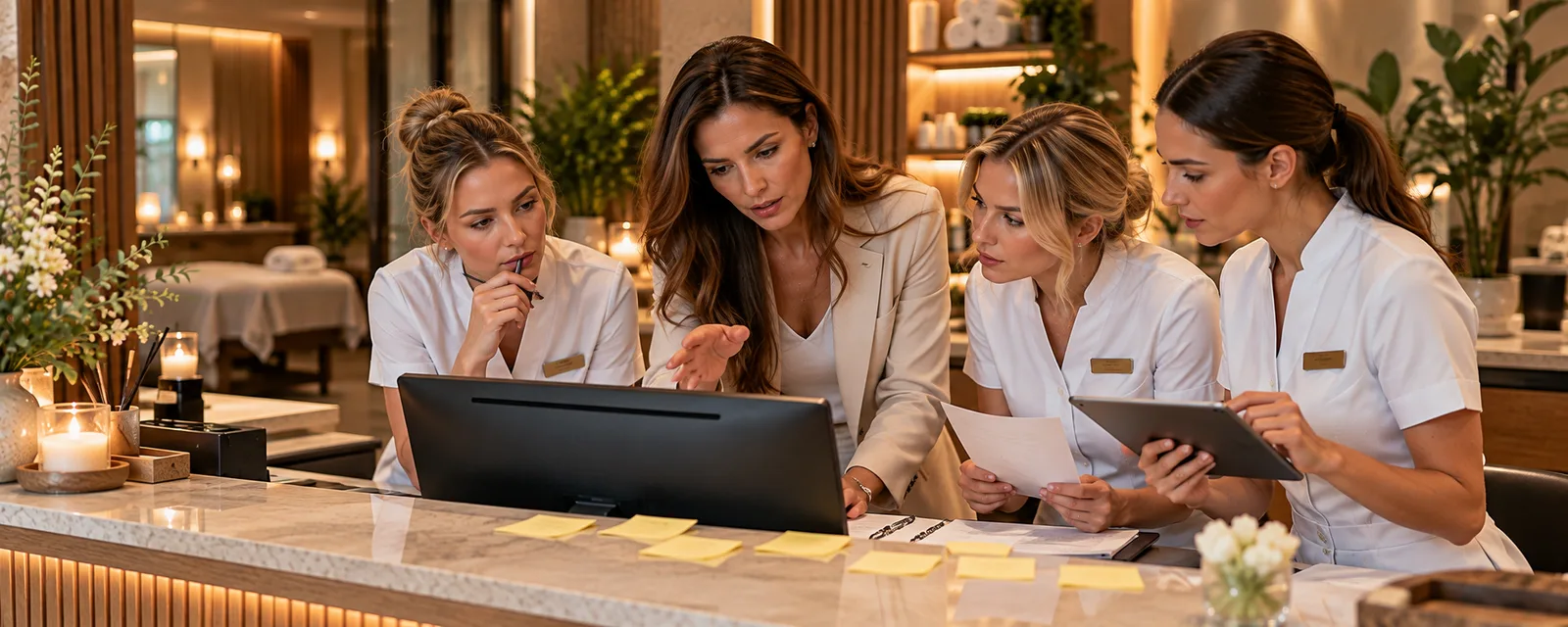
Not every spa needs one extensive system that does everything. At a smaller spa, several well-chosen tools may work effectively for a long time. What matters is whether those tools work together and whether employees have to enter the same information repeatedly.
Before choosing software, consider the following questions:
- Are bookings and day-to-day guest visits managed in a consistent environment?
- Can reception staff quickly check a guest's visit status?
- Are product sales included in daily operations?
- Can checkout be completed efficiently?
- Does the owner have access to useful reports?
- Does the tool fit the size and operating model of the spa?
- Can it integrate with other solutions that must remain in use?
Evaluate not only the feature list but also the everyday user experience. Even a sophisticated system may fail to deliver the expected benefits if it is too complicated for the team. Conversely, a straightforward solution can be extremely useful if it meets the actual needs of reception staff and management.
Before making a decision, walk through a typical guest visit, from booking to checkout. This helps establish whether a solution supports the entire journey or only one part of it.
8. How Ontero Helps Connect Daily Spa Operations
Ontero is a platform designed for businesses that manage guest visits. It brings together booking and event management with tools for reception, sales, rentals, and operational reporting.
This can help spa owners organise daily work more effectively and reduce the fragmentation of information across separate tasks. Reception teams gain support in handling guests, while management can use operational information and statistics available within the system.
The right combination of tools depends on the type of spa. A small venue focused primarily on treatments has different priorities from a larger facility with a reception team, retail sales, and equipment rentals. Before choosing a solution, it is worth reviewing the actual guest journey and identifying which parts of the operation need to work together most closely.
Discover Ontero at ontero.app or explore the product at ontero.app/product.
Conclusion
Connecting guest visits, reception, and sales in a spa starts with organising information and defining how the different stages of daily work should interact. Bookings should support visit preparation, reception should have access to the information it needs, and sales and checkout should be handled consistently.
Well-chosen tools can reduce manual data entry, improve team collaboration, and make performance easier to analyse. They cannot replace skilled staff or high-quality services, but they can create the conditions for employees to focus more on guests while giving owners a clearer picture of how their business operates.
The goal is not simply to introduce another system. It is to make bookings, guest service, and sales work together to create a consistent guest experience and support the smooth running of the spa.