Introduction
Running a fitness club involves more than managing check-ins and keeping the front desk running smoothly. Additional revenue can also come from selling products that customers use before, during, or after their workouts. Water, isotonic drinks, protein bars, towels, and small training accessories can all meet the everyday needs of people visiting the club.
Equipment rentals can provide another source of revenue. Some clubs allow customers to borrow additional accessories or equipment for the duration of their workout. In these cases, the process involves more than handing over an item. Staff also need to record the rental, handle any applicable payment, and register the return.
These activities share a common business goal, but they require different operational approaches. A product sale ends with a transaction, while a rental means the equipment should return to the club and become available to other customers.
How can a fitness club develop ancillary sales without making everyday operations more complicated?
1. Choose Products Customers Actually Need
Expanding the product range does not have to be the first step. It is more important to offer items that match the needs of people visiting the club.
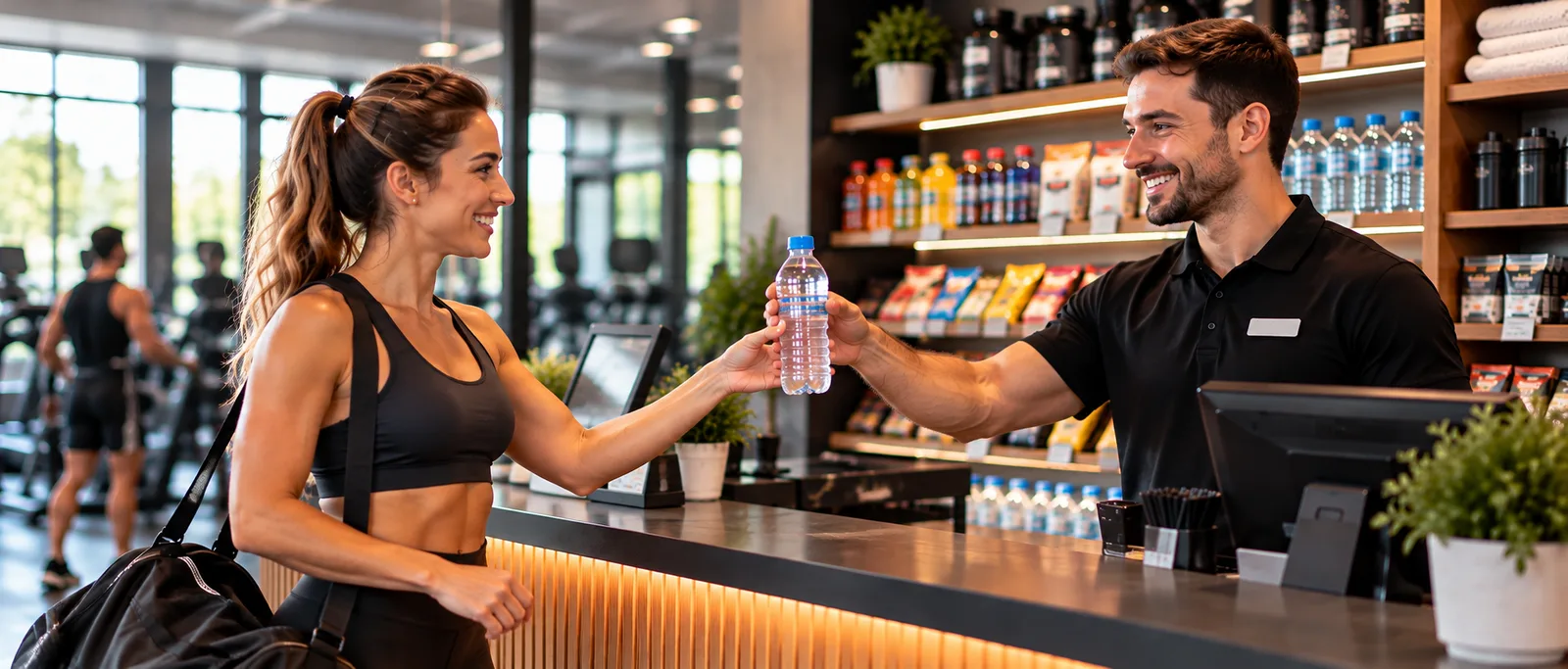
A customer who has forgotten to bring water may be happy to buy a drink on-site. Someone finishing an intense workout might want a protein bar or another snack. Regular visitors may be interested in small training accessories such as resistance bands or lifting straps.
Start by observing customer questions and behavior. What do people most often ask about at the front desk? Which products do they need during their visits? Which items sell regularly, and which remain on the shelf for a long time?
These observations can help the club build a small, carefully selected product range.
Common product categories include:
- Drinks: water, isotonic drinks, and other non-alcoholic beverages.
- Snacks: protein bars and other convenient options.
- Accessories: resistance bands, lifting straps, socks, and small training essentials.
- Everyday items: towels, if the club sells them, and other accessories that may be useful during a workout.
Not every club needs all these categories. The offer should reflect the facility's profile, available space, and customer expectations.
2. Make the Product Range Easy to Notice
Even well-chosen products will not sell if customers do not know they are available.
Create a visible sales area. Drinks and snacks can be placed near the front desk, a lounge area, or another location where customers naturally stop before or after their workouts. Accessories should be displayed so customers can quickly see what is available and how much it costs.
Clear prices, short descriptions, and an organized display make a difference. Customers should not have to ask about the price of every item or wait while a staff member checks whether it is in stock.
Staff communication also matters. An employee can mention that water or towels are available when it is relevant to the conversation and genuinely helps the customer. The goal is not to push a purchase during every visit, but to make it easy for customers to find what they need.
Product information can also be included in the club's informational materials or communication channels. The important thing is to keep it accurate and avoid promoting items that are currently unavailable.
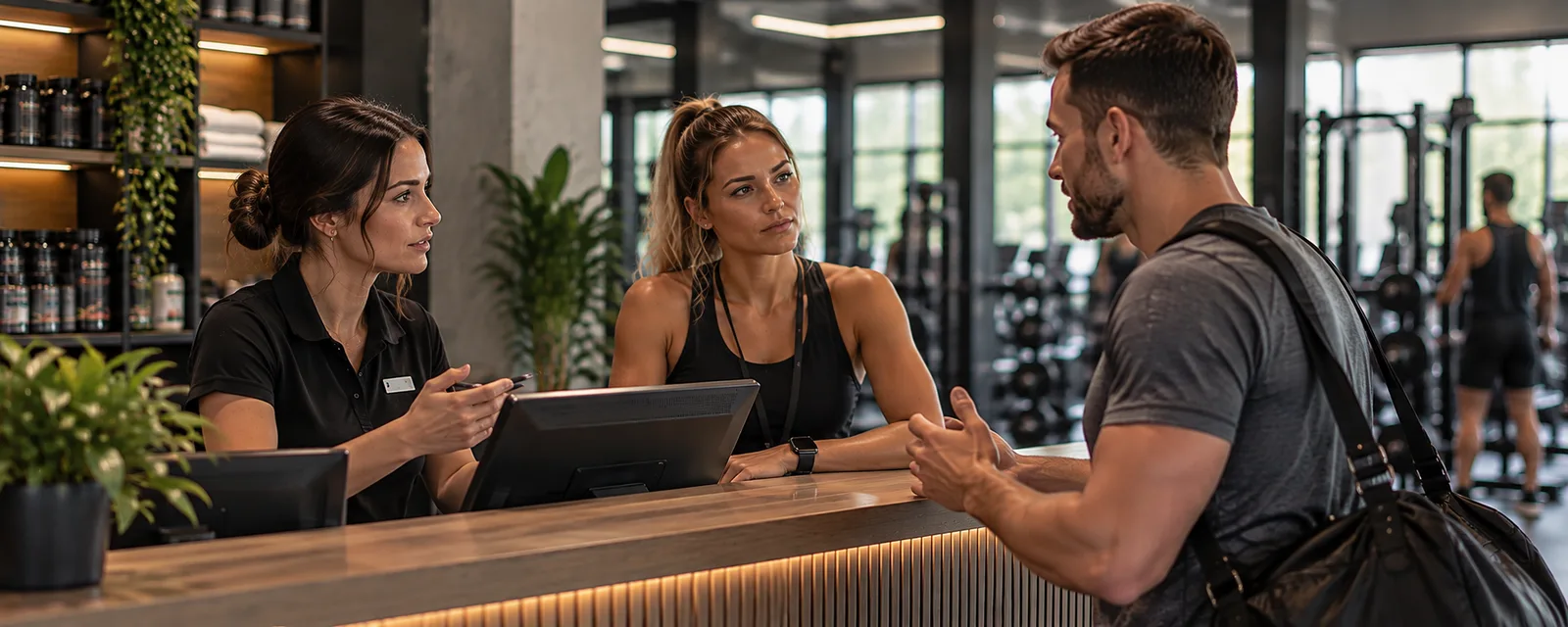
3. Organize Sales at the Front Desk
Additional sales should be straightforward for both customers and staff. If buying a drink involves lengthy price checks, manually recording the same transaction in several places, or trying to reconstruct sales later, the process quickly becomes inefficient.
A structured product list with names and prices helps simplify the work. Staff should be able to select the correct item, record the sale, and accept payment according to the club's procedures.
It is also worth establishing clear rules for unusual situations, such as an incorrect sale, a canceled transaction, a product return, or a discrepancy between the physical stock and recorded inventory.
Consistent sales records help prevent products from being sold without a corresponding transaction. They also make it easier to review which items sell best.
When several employees handle sales, shared procedures are especially important. Everyone should know how to register a purchase and where to find up-to-date product information.
4. Monitor Product Stock and Replenish Supplies
Product availability affects sales. If a customer regularly buys water at the club but often finds it out of stock, they may stop seeing the facility as a convenient place to purchase it.
That is why stock levels should be checked regularly, with clear responsibility for replenishing supplies. A small club may only need to monitor a handful of essential products. A larger range may require more detailed inventory records.
Products with short shelf lives deserve particular attention. Stock levels should reflect actual demand to reduce losses caused by expired goods.
When reviewing sales, the club can look at:
- which products sell most frequently;
- which items remain in stock for a long time;
- how often each product needs replenishing;
- whether stockouts occur regularly during peak hours.
The goal is not to create complicated reports. Even basic information can help the club plan purchases, avoid tying up money in unsold products, and keep popular items available.
5. Separate Product Sales from Equipment Rentals
Sales and rentals may look similar from the customer's perspective, but operationally they are two different activities.
When a customer buys a drink or protein bar, the product leaves the stock intended for sale and the transaction is completed. When equipment is rented, the item still belongs to the club and should be returned after use.
Depending on the facility, suitable rental items might include selected training accessories or other equipment made available to customers under specific conditions.
Before introducing rentals, the club should decide:
- which items can be rented;
- whether rentals are paid and how the fee is determined;
- how staff record equipment being issued;
- who is responsible for accepting returns;
- how to handle damaged, lost, or unreturned items.
The key distinction is between a product being available for sale and equipment being available for rental. An item that has been rented out should not be treated as if it were still on the shelf and ready for the next customer.
6. Record Equipment Issues and Returns
Equipment rentals require records of both payments and the physical movement of items.
If a staff member hands over an accessory without recording the rental, it may become difficult to determine where the item is later. The same problem occurs when a customer returns equipment but the return is not recorded.
A straightforward procedure should include registering the rental, identifying the item, and recording its return. Depending on how the club operates, it may also be useful to note the equipment's condition and report any damage.
This helps the team quickly determine:
- which items are currently rented out;
- what equipment is available for the next customer;
- whether an item has been returned after use;
- which items need inspection or repair.
The club should establish who accepts returns and what happens if equipment is not returned when expected. The procedure should be familiar to the entire team, including employees taking over a shift.
When rental activity grows, a tool that records issues and returns in one place can be useful. The most important requirement is that information remains accurate and accessible to the employees responsible for handling equipment.
7. Use Data to Make Better Decisions
Ancillary sales should not be evaluated solely by total revenue. It is worth reviewing which products and services actually make sense for the club.
For product sales, useful information includes transaction volumes, the most popular items, and how regularly stock needs replenishing. For rentals, the club can track which items are borrowed most often, how quickly they become available again, and whether problems with returns or equipment condition occur repeatedly.
This information supports practical decisions. The club might increase stock of a popular product, stop ordering an item that rarely sells, or change its rental procedures if the current approach is difficult to manage.
It is important to remember that revenue is not the same as profit. Product sales should be evaluated against purchase costs, inventory losses, and the time required to handle transactions. Rentals also involve equipment wear, cleaning, repairs, and staff time.
The best decisions combine operational data with observations from the club's everyday activities.
8. How Ontero Can Help Organize Sales and Rentals at a Fitness Club
As a club develops its ancillary sales, organizing day-to-day operations becomes increasingly important. Staff need to know which products are offered, how sales should be recorded, and which items have been rented out and are awaiting return. When these tasks take place alongside check-ins and customer questions, having access to up-to-date information becomes particularly valuable.
Ontero helps organize the operational side of running a fitness club. The system supports front desk operations, product sales, and equipment rentals, helping the team manage these activities in a more structured way.
For rentals, it is important to record equipment issues and returns and to be able to check which items remain in use. Product sales, on the other hand, require an efficient transaction process. These are different activities, so each should be organized according to how it works in practice.
Ontero is designed for venues where guest service involves many everyday tasks. Rather than relying entirely on loose notes and verbal handovers, a club can gradually organize more of its work within one environment.
Learn more about the system on the Ontero website or visit the product page.
Conclusion
Selling drinks, snacks, and accessories, alongside offering equipment rentals, can complement a fitness club's core services. To make these activities worthwhile, however, the club needs to organize not only its product range but also the way sales and rentals are handled.
Start with products that meet customer needs, a visible display, and an efficient way to record transactions. Then establish a consistent approach to stock control and clear rules for equipment rentals.
Product sales mainly require accurate transaction records and inventory control. Rentals additionally require tracking equipment issues, returns, and availability. Keeping these activities distinct helps prevent mistakes and gives the team better oversight of the club's equipment.
Well-organized ancillary sales do not have to mean more work. With clear procedures in place, they can become a natural extension of the customer visit and another part of a well-run fitness club.